Saturday, July 24, 2010

ENTRIES M & N


  • Noun Soft Sculpture

I really liked this project because we were assigned our sculpture ideas randomly from other people. I drew a hairbrush which not only do I not use, but I don't even own. It was fun to make one out of newspaper, but I would have liked to have done some sculpture out of something more pliable. I spent most of the time fashioning tube like bristles of the brush by rolling up newspaper. I thought that the bristles would be the most important part of the brush.
( I would have loved to include a photo of my hairbrush sculpture but sadly it was demolished by my children immediately when I arrived home).

  • Environmental Art

The sculpture project that I really enjoyed was the nature sculpture. My group went to the river and build a strange looking tepee out of wood and willow branches. We were inspired by the native American music that was playing at the park across the river.

Integration

  • Sculpture is a great art form for kids because it gives them a glimpse of physics. The structures they build have to be able to support themselves.
  • Instead of having the children select someone else's idea for their sculpture, you could have the students select an object from the civilization they are studying.
  • Early learners could be instructed to sculpt freestanding letters of the alphabet
  • In a sculpture like the one I built in the river, students could be taught about the natural strength of the materials they are using.
  • After completing the sculptures, students could be instructed to write about them and describe them.

ENTRY L


Printmaking

Printmaking was a very fun day in the class. We used a variety of methods to make prints. It was really interesting to explore the different ways to create art in a way that it could be reproduced. I don't think that there was anything that I would change about the ways in which we conducted these excercises, except to adapt them to the appropriate age group of the students that I would work with in the future.

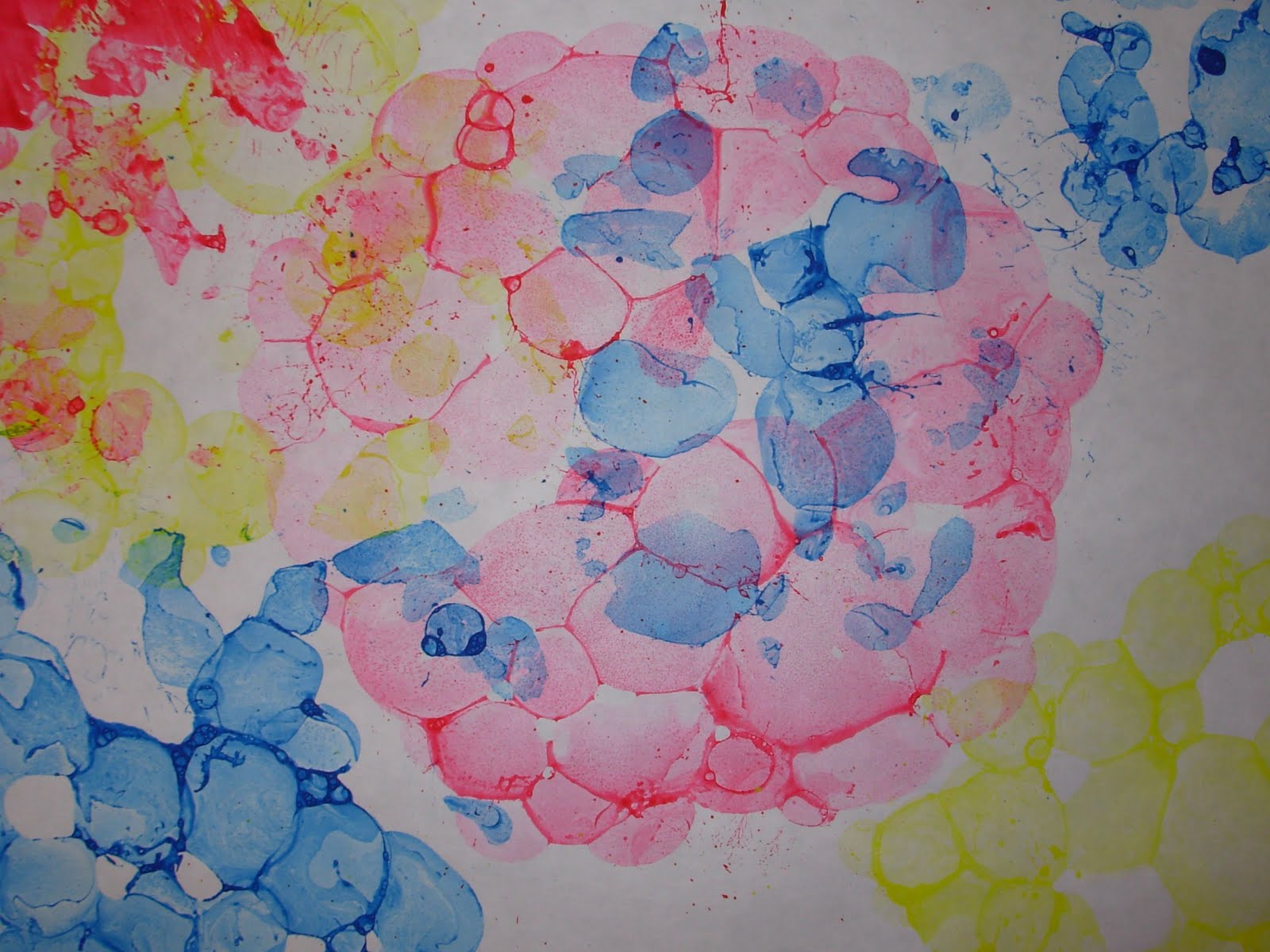
Bubble print making
  • 3 containers of bubbles with paint colors dilluted in them.
  • Blow bubbles in tray and then lowered the paper into the bubbles.
  • The finished project held the shapes of the bubbles and was really fun.
Soft Carving
  • We took a linolium block and used some etching tools to create an image.
  • Then we rolled on paint and printed it onto paper
Etching on foam
  • Using a stylus, we created an image on foam board by depressing the foam.
  • Then we covered the foam board with paint and pressed it on our paper.
  • We then burnished the foam to ensure adequate transfer of the paint.
Veggies
  • using veggies cut in cross section,
  • we dipped the veggies in paint
  • then we transferred the image of the veggies onto paper.
Eraser
  • Similarly to the soft carving, we etched an image into and eraser
  • then we covered the eraser with stamp ink or with colored markers
  • then we printed patterns on paper with our new stamps
Colo-graphs
  • using random pieces of foam and paper we created a raised surface on a piece of cardboard.
  • then we painted the raised surface
  • and printed it on a sheet of paper.
Monoprint
  • I hand painted generously on a piece of plexi glass
  • then placed a piece of paper on top to create a single print.
Marble print
  • in a large tub I squirted a large pile of shaving cream.
  • then I applied some liquid watercolor paint to the cream randomly
  • then stirred it in using a hair pick
  • then I placed a sheet of paper on top and created some really neat looking prints.
Integration
  • students could use the etching technique to create a sample of a newspaper, then they could produce several of them to distribute to friends.
  • The soft carving technique could but used to recreate some ancient hieroglyphics of whatever culture the students are studying at the time.
  • The students could use the veggie prints to create a larger version of whatever food item they are using. This could be related to health, science, etc.
  • Students could create a template using any one the media above to print their times tables or whatever.
  • Different shapes could be utilized in the colograph printing to introduce some elementary concepts about geometry.


ENTRY K


Empathy Portfolio

Spot the Fake smile

I took the test to see how many fake smiles I could correctly identify. Though I generally consider myself to be very good at reading people, I only got 8 out of the 20 correct. Apparently I go off of more than just the eyes when determining whether or not people are genuinely happy.

ENTRY J


Symphony Portfolio

Follow the Links.

I have been searching for a new atv for a while now and so I decided to begin this exercise with a web site that was already up on my browser. I began with a website advertising the new Yamaha Wolverine 4x4 atv. I followed a link to a dealership in Minnesota, then to a financing advertisement for motorcycles. From there I visited the parent company of the bank financing the bikes and then a mortgage calculator. I learned from there that I was paying too much for my current mortgage when I followed yet another link to the lender's current rate site. From there I visited a site that was giving away government money to people in a tough financial situation.

I wonder if they would help me get a new atv?

The overarching theme of my search was money. More specifically spending it. My suspicions that our society is overly consumerist and not productive were confirmed by this exercise.

ENTRY I


Boise Art Museum Field Trip

On our field trip to the Boise Art Museum we had the opportunity to meet with the person responsible for coordinating the efforts of the communities education and schools with the art museum. We received information about how the museum handles field trips and also received an example of how the people there get the students to actively think about he art that they are viewing. We toured the Circles exhibit and the Autoban exhibit. I found myself really enjoying a massive painting which featured a murder of crows blocking a path. We completed our tour with a trip to the back of the museum to create our own watercolor paintings of birds.

Integration

The integration of the BAM to everyday classroom curriculum would depend greatly on the exhibits that the museum is featuring at the time. Given the current art on display I would suggest the following for integration.

  • Wanxin Zhang- these sculptures could be utilized to teach the students about the cultural meshing between the artists ancient culture and the current norms.
  • The Audubon exhibit could help to bring in a lesson on wildlife with its heavy emphasis on photo-realistic birds.
  • The exhibit featuring circles has valuable implications with mathematics.
  • One area that I think the trip to the BAM would greatly help children is that it would help them to learn appropriate manners and etiquette in a unique setting.
  • As with almost any field trip, a trip to the BAM would be easily incorporated into writing curriculum by having the students document their experience in some way.

Thursday, July 22, 2010

ENTRY H


Water Shed Field Trip

This was a very interesting field trip because I never even knew that the watershed was there. I did always assume that the city had a water treatment facility, but I had in no way imagined that it was incorporated in the city's art program. We went out to the watershed and got a general feel for the place one day, and provide an art experience for visitors another day.
We had a great deal of fun interacting with the kids at the field trip. My team created a miniature version of the Boise River, complete with fish and trash. We gave the children a free gold fish from our river if they would help us to identify the items in our river that didn't belong.

Integration

  • This experience would be very easily integrated into children's science curriculum. They could attend the presentation on water preservation.
  • The watershed deals with a large volume of flow, so it would make a great segway into mathematical calculations.
  • The trip could be integrated into the student's life science curriculum by examining all of the wildlife effected by the water in our area.
  • Writing or English class could be integrated into the trip by assigning the students to write a story about the experience.
  • Students could learn about social studies by exploring the way that other cultures have dealt with wastewater treatment or irrigation & such.

ENTRY G


Story Portfolio

"Play Photo Finish"

This was a very fun exercise. I have played it several times. My favorite version is to put on the television with the volume turned all of the way down and sit with my wife trying to guess what the characters are saying and what is going on in the story. This time however I played it with my kids.

I showed my kids a picture of a man in a car. He was wearing a helmet in the car and driving gloves which was slightly out of the ordinary. Most adults would have recognized the man as a race car driver, but my children had a slightly different interpretation.
They proceeded to explain to me that the man was actually a football player who was running late for practice, and that he didn't want to wash his hands after eating because he was running late and he had peanut butter all over his fingers. My son is very actively involved in the local flag football program and my daughter is a die hard PB&J fan.